Saturday, May 2, 2009

Talk About a Badass

The Lone Surfer of Montana, Kansas by Davy Rothbart


Davy Rothbart is best known as the personable and fun-loving founder of Found Magazine. I once saw him during a speaking tour in which he and his brother criss-crossed the country in an old van, sharing their favorite found items that people had submitted to the magazine.

I wasn’t sure what to expect from this thin collection of short stories. I figured they’d be weird and funny, but was surprised at how solid they were throughout. The language is simple, and the stories are quirky and surprising without being silly. There’s some real depth here, and Davy shows some chops. My favorite stories are the title story and “Elena,” about a boy’s infatuation with a Mexican prostitute.

The Murphy Stories by Mark Costello


I had the pleasure of taking Costello’s fiction writing class at the University of Illinois back in the mid-90s. He was a great teacher, and I wish I’d known at the time how masterful a writer he is. I came across his story, “Murphy’s Xmas,” included in the Norton Anthology of Contemporary Fiction (it was also included in The Best American Short Stories 1969). That story is the one which closes this 1973 collection.

The stories give snapshots of the life of Michael Murphy, a Midwestern Irish Catholic father, husband and drinker. Unfortunately, Murphy is most skillful at the latter. Each story gives us a glimpse into his life at various points, from his late teenage days to the death of his father, his strained relationship with his wife, several affairs and finally a heartbreaking Christmas where he realizes what he’s ruined.

The prose in this book borders on poetry. And as troubled a character as Murphy is, it’s hard not to feel sympathy for him. As much as he creates his own problems, and as selfish as he sometimes is, there’s something very relatable in him. In 1994, Costello published a follow-up, Middle Murphy, which I look forward to reading next.

Saturday, April 25, 2009

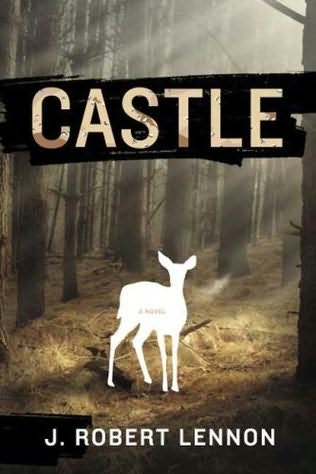
Castle by J Robert Lennon


I’m a huge fan of Lennon’s Mailman and Pieces For the Left Hand, so even though I have a long list of books to read, I immediately ordered this one and bumped it to the top of the list when I read about its release.

The story begins when Eric Loesch, a middle-aged loner, moves back to his mid-western hometown of Gerrysburg, where he buys an old fixer-upper on 620-acres of wooded land outside of the small town. Loesch is not a particularly likable man. He is rude to the people he encounters in the town, arrogant and stiff. And we get the sense that he has some rather dark secrets in his background. It’s a promising start to the story, especially with Lennon’s talent for creating quirky, flawed characters and intriguing stories about small-town life.

But about halfway through the book, the story takes a bad turn. Just as it’s getting genuinely creepy (mysterious sounds from the house at night, shadowy figures moving around in the forest), it goes off on two weird tangents, one that would stretch credibility for a Scooby-Doo plot, and a flashback at the end that feels out-of-place and tacked on. The latter, incorporated into the story with more deftness, might have worked and helped explain some of the character’s quirks. But the main plot arc is still so preposterous that I kept looking for signs that it was all an allegory, or a dream, or something other than just a bad story.

I’ll still read anything Lennon puts out, and I give him props for taking a big swing with this one. He just whiffed.

Thursday, April 23, 2009

Dreams From My Father by Barack Obama [audiobook]


I started a membership to an audio book club, which allows me one free download a month and lets me fill in my walking time with books as well. In selecting audiobooks, I’m considering who is reading them as much as who wrote them. Especially this first book, I was very anxious to hear Obama’s story told in his own voice.

Although written before Obama’s political career took off, it’s hard to listen to this book and not hear Obama the president. But it was the fact that this book was written early in Obama’s career, before he was a guarded, calculating politician, that drew me to it. He is very frank about everything from his disappointment with his father to his drug use, from his take on race relations and search for an identity to his dealings and disillusionment with Chicago politics and community leaders. His early life would be an interesting story for any man—considering that he’s now the president, it’s really interesting.

As a president, Obama is a top class writer and orator. As an author, he tends to overwrite a bit for my taste. And as a reader of audiobooks, he’s so-so. He has a commanding voice, but his accents slip in and out when he does dialogue and he comes across a little stiff. Still, I wouldn’t have anyone else read this book. And overall, it’s a great and insightful look into a living historical figure.

Saturday, March 7, 2009

Outliers by Malcolm Gladwell


Gladwell’s books are always addictive and interesting to read, but I always feel a tad let down at the end when I think about what the book was actually saying. He puts forth a simple premise that seems fairly intuitive, then supports it with fascinating case studies. The premise itself could probably be covered in an article, but it’s the case studies that make it persuasive. And Gladwell’s real strength is in his uncanny ability to find these varied stories from different fields and then make unexpected connections to support his premise.

In Outliers, Gladwell’s simple assertion is that our notion of the self-made man, the superstar who rises to the top of their profession by their own hard work and natural talent, is a bit of a myth. Yes, those geniuses of whatever field they’re in are indeed talented, and yes they do work hard, but in every case they have benefited from a multitude of other factors: the day and year they were born, who their parents were, their economic situation, and a great deal of good ol’ luck.

Again, though, it’s not this premise that’s groundbreaking; it’s Gladwell’s method of supporting it. To tell us why people are successful, he explains why most NHL hockey players are born early in the year, why many of Silicon Valley’s greats were born within a few years of each other, how being kept out of the elite New York law firms in the mid 1950s helped Jewish lawyers succeed twenty years later, how cultural customs can cause planes to crash, and why in the south a person is much more likely to be murdered by someone they know than by a stranger. It all comes back to the question of nature vs. nurture, and whether a self-made man can ever claim to be truly self-made. Gladwell’s answer is: not really.

Sunday, March 1, 2009

The Learners by Chip Kidd


This is Chip Kidd’s follow-up to The Cheese Monkeys, picking where the first book left off. It’s 1961 and Happy, now out of art school, lands a job at the small New England ad agency where his instructor started his career. Much of the book is about office life, and though it may be an accurate portrayal of what it was like in an advertising agency at the time, with its slapstick humor, quippy dialogue and martini lunches, I found it all corny and too clever for its own good.

Nor did I care much for the world outside the agency or Kidd’s interjections about typeface and design. It’s not that I don’t appreciate these things—working in an ad agency myself, I was expecting this to be the most appealing part of the book—I just felt like Kidd was heavy-handed with it all.

The only thing that saves the book is when Happy is contacted by a Yale professor Stanley Milgram to create a small-space ad calling for volunteers for Milgram’s now-famous experiment in which he tested how willing people are to follow orders, even if it means hurting another person. By placing Happy in this historic moment, Kidd adds interest to what is otherwise a pretty uninteresting book. Definitely a let-down after Cheese Monkeys.