Showing posts with label books. Show all posts

Monday, February 8, 2010

How the Mighty Fall and Why Some Companies Never Give In by Jim Collins


I picked up Jim Collins’ Good to Great a couple years ago while on vacation. It was an easy-to-read, research-based, insightful look at how companies make the leap from, as the title suggests, good to great. This book examines the opposite phenomenon, category leaders that make a series of mistakes and plummet into irrelevance or non-existence. With the same diligent research, Collins and his team find five stages of decline and the warning signs that a company might be headed down that path:

1. Hubris born of success. The company enjoys success and develops an arrogant belief that they have it figured out or an attitude that they no longer need to innovate and can rest on their past successes.
2. Undisciplined pursuit of more. A company’s success in their core business leads them to a reckless pursuit of growth in other areas, often over-committing financially and/or simultaneously neglecting the core business that bore them success in the first place.
3. Denial of risk and peril. Although warning signs start to emerge that a company’s current path is untenable, they ignore the risk in hopes that they will overcome it or that, in another show of hubris, their previous success makes failure impossible.
4. Grasping for salvation. With their impending demise staring them in the face, the company makes drastic, often ill-advised changes in an attempt to pull out of their nosedive. They might hire a new superstar CEO, rebrand themselves, or implement a series of company-wide reorganizations. Collins makes the point that it actually is possible for a sinking company to recover from Stage 4 and even come back stronger than before, but it requires, at the very least, a disciplined return to their core competencies, not just a reshuffling of the deck chairs.
5. Capitulation to irrelevance or death. In a final death rattle, the once-great company resigns to being irrelevant, is swallowed by another company, or closes its doors for good.

These are the commonalities in the process of demise from company to company, but Collins points out that the specifics that lead a company down this dark path can vary. He quotes Tolstoy: “All happy families are alike; each unhappy family is unhappy in its own way.” Like in Good to Great, the most interesting part of this book is these specific case studies. Across industries, Collins examines companies that got it right, and then got it spectacularly wrong.

While Good to Great was probably a more helpful book with more concrete answers, as Collins points out, sometimes it’s more about the questions than the answers. And “What should I not do?” is a good question. There’s also something tragic (in the Shakespearean sense) to the company that rises to greatness only to collapse under the weight of its own arrogance. And that can be enjoyable to read about.

The audiobook is read by Collins, who can be over-the-top at times, but he obviously feels passionate about what he’s saying, so it’s tolerable.

In Defense of Food: An Eater's Manifesto by Michael Pollan [audiobook read by Scott Brick]


Most of what we eat is not food. That’s the simple premise in Pollan’s follow-up to The Omnivore’s Dilemma. Most of what we eat are food-like substances (and that might be generous), packed with preservatives, artificial flavors, fillers and other chemicals that don’t exist in nature. Pollan makes the point that if our grandparents walked into the modern supermarket, they wouldn’t recognize many of the things on the shelves. This is not good.

It’s the Western obsession with nutrients as opposed to food that has led us here. Sometimes flaky dietary science, a culture desperately seeking out the “magic bullet,” big-budget marketing campaigns from American food manufacturers and laws and regulation that place the financial health of the agricultural industry above the physical health of the population have all contributed to a situation where people really aren’t sure what they should and shouldn’t be eating. As Pollan points out, that’s a uniquely human dilemma.

Although he give the disclaimer that he’s nobody to be telling anybody what to eat, he does give some good, common sense rules of thumb: Eat mostly plants (mostly green plants). Eat less. Think of meat as more of a side dish. Don’t eat things with ingredients you can’t pronounce. Paradoxically, avoid foods that make health claims on their packaging (which implies, firstly, that they have packaging—something else to probably avoid). Shop around the edges of the grocery store. All of these direct us to eat food, not food-like, processed, manufactured food-like substances. It’s a great message, and with all the confusing health claims out there, it’s nice to have a call for simple common sense.

The audiobook is read by Scott Brick who does a fine job.

Sunday, February 7, 2010

Shutter Island by Dennis Lehane [audiobook performed by Tom Stechshulte]


Lehane is a fantastic writer of thrillers. All of his writing has an intense quality that keeps you on the edge of your seat with the pervasive sense that something terrible could happen at any time. This book, probably more than any of his other books, is laced with that paranoia. And although it starts off as a crime story, it’s really further down the spectrum toward psychological thriller, borderline gothic horror at some points. Somewhere close to Silence of the Lambs, perhaps.

The book opens in 1954, with two U.S. Marshalls taking a ferry out to Shutter Island, the location of Ashecliffe Hospital, a mental hospital for the criminally insane in Boston Harbor, to investigate the escape of a patient. The whole story is told from the point of view of Teddy, one of the Marshalls, as he delves deeper and deeper into the dark secrets of the island and the even darker mysteries of his own psyche. The twists and turns of the plot, at which Lehane is a master, are what make the story so interesting, so I won’t give any away here.

Lehane’s writing is as good as it always is, though the characters felt a little more stock than normal. While incredibly creepy, I didn’t connect with them as much as I did in his past stories. And perhaps because much of the book deals with the inner workings of the mind, I found pieces of it pushing the bounds of believability. Worth the read, although not Lehane’s best.

The audiobook is performed by Tom Stechschulte, who does a fantastic job at voicing multiple characters with distinct personalities. It’ll be interesting to see how the movie is (directed by Martin Scorsese and starring Leonardo DiCaprio).

Wednesday, February 3, 2010

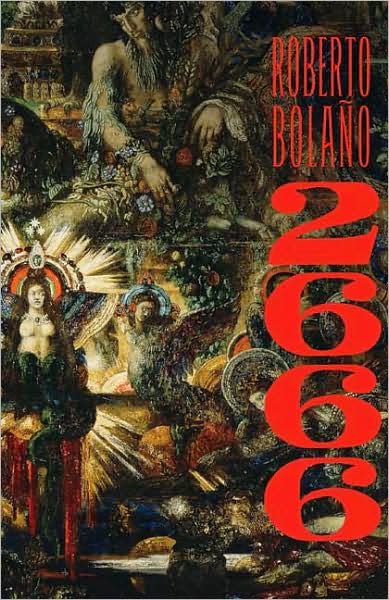
2666 Group

I'm reading Roberto Bolaño's 2666 with an online reading group. It's a very dense book, heavy in both senses of the word and I thought that a reading group would be helpful.

It's a fantastic book, although I'm only 100 or so pages into it. It's a collection of five loosely-related "books." I'm mid-way through the first.

Anyway, as I was doing some reading online about Bolaño, I came across this quote, from Rodrigo Fresán’s eulogy of Bolaño (translated from Spanish):

I don’t know how there can be writers who still believe in literary immortality. I understand that there might be those who believe in the immortality of the soul, and I can even believe there are those who believe in Paradise and Hell and in that freaky intermediate station that is Purgatory, but when I hear a writer speak of the immortality of definite works of literature I feel like slapping him. I’m not talking about really belting, so much as just one slap, and afterwards, probably, hugging and comforting him. In this I know that you won’t be in agreement with me, Rodrigo, because you are basically a non-violent person. As am I. When I say, deliver a slap, I’m more thinking of the palliative character of certain slappings, like those in the movies that are administered to hysterics so that they will react, stop screaming, and save their own lives.
It's such a nice quote, because it gets at what most writers aspire to--a type of literary immortality. Even those who imagine an granddaughter finding a dusty old box of journals in the back of the attic some day and pouring over them as if she has found, in the ramblings of her grandfather, an epic tale, humorous bits about a different time, the unpublished Great American Novel or, perhaps, just a bit of insight from someone who has seen more of life than she has.

Friday, January 15, 2010

Book List 2009

Here's a link to my final Book List 2009, as a pdf.

Thursday, January 7, 2010

Desert Solitaire: A Season In The Wilderness by Edward Abbey


This was perhaps my favorite book from 2009. Written in 1968, during Abbey’s time as a park ranger in Arches National Monument near Moab, Utah, it falls somewhere between Jack Kerouac and Bill Bryson in both style and substance. Abbey is a cranky old coot, railing against civilization, the park service, the government, the tourists and the roads built to bring them into the depths of the parks. But I underlined the heck out of this book. It’s philosophy, environmentalism, natural history, taxonomy, folklore, poetry and angry ranting all in one. Abbey’s sense of humor and sarcasm are endearing, and his environmentalist spirit is inspiring, though dated by some of Abbey’s more hypocritical moments: he has long beautiful passages detailing the beauty of the canyonlands, yet offhandedly mentions rolling an old tire down the slope from the road for the fun of it; and with Luddite fervor, he lambasts the obnoxious presence of ignorant tourists in the park, yet longs to head to the mountains where he can carve his initials into the trunk of a juniper tree. Still, these faults aside, Abbey is a fascinating thinker, and his descriptions of the natural beauty around him are at times stunning. I’ve spent a little time in Joshua Tree and the canyonlands of southern Utah, and reading Abbey’s descriptions made me want to go back and explore them further. And the case he makes for our need to have a wilderness, an “out there” that serves both the few that explore it as well as the many who simply take comfort in knowing that it exists, that we haven’t developed every square inch of our crowded world, is both compelling and, I think, spot on.

Sunday, December 6, 2009

Independent People by Halldor Laxness


Laxness, an Icelandic author, won the Nobel Prize for literature in 1955 for his ability to create epic tales. This is certainly one of them. It’s the story of Bjartur, an Icelandic sheep farmer who is set like a mountain in his ways. He stubbornly bears the loss of family members, attacks on his sheep, political corruption and the changing world around him, set on his goal to live independently and build his home and farm, Summerhouse.
“Yes, it was a good man indeed who could stand immovable as a rock in these times, when everything around him, including money and views of life, was afloat and swirling in perpetual change; when the strongest boundary walls between men and things in time and place were being washed away; when the impossible was becoming possible and even the wishes of those who had never dared to make a wish were being fulfilled.”

The most interesting conflict though, better than Bjartur’s conflict with the world, is his stubborn feud with his equally strong-willed daughter, Asta Solilja. The pig-headed way in which Bjartur disowns his daughter and refuses to make amends makes you hate him, but in the end, as he is weighted down by debt and loneliness and finally begins to admit regrets, it’s hard not to feel for Bjartur. For his entire life, he has been principled to a fault, but principled nonetheless. It is then, as he looks over Summerhouse, ruined by poor financing and poor construction, that he writes:
“For what are riches and houses and power
If in that house blooms no lovely flower?”

Independent People is a book that at times feels like it is being endured, much as Bjartur endurs the harsh northern winters. While there are moments of action, sharp conflict and shocking surprise, much of the novel is concerned with the various diseases that infect the sheep, descriptions of the weather and landscape, the politics of socialism and the poems that Bjartur enjoys writing and reciting. It’s rewarding in the end, but is a slog to get through. It has been compared to Tolstoy. The story at times also reminded me of Gabriel García Márquez’s One Hundred Years of Solitude, though I would be quicker to recommend that book. As frustrating as it is at times, by recommending Independent People to someone, I’d worry that they might return and throw the book at me.

Sunday, November 22, 2009

On Chesil Beach by Ian McEwan


This is the story of a moment in time, a few hours really, and its consequences. The story takes place on the wedding night of a young couple, Florence and Edward. They are staying at a small hotel on Chesil Beach, and when the time comes to consummate the marriage, well, let’s just say there is a misunderstanding. This is prudish, pre-sexual-revolution Britain, the incident is blown out of proportion, and the fears and frustrations of Edward and Florence, the same fears and frustrations of any young couple just married, manifest themselves in a pointless and stubborn argument.

I have mixed feelings about this book. Most of it, the part that leads up to and surrounds the incident itself, I found quite boring. McEwan’s writing is solid, but the Victorian sensibility of it all just isn’t my thing. But the last part of the book, when Edward is looking back on the incident many years later and thinking about how that one small moment had such a large impact on his life—that part’s really moving and relatable and masterfully executed. And it made the rest of the book worth it.

On Chesil Beach is the first McEwan I’ve read, but from what I’ve heard, it deals with a favorite topic of his—how small events, even the ones that don’t feel like events at the time, can change everything. It’s little more than a short story, really, which is the perfect length for it. If the upfront required much more investment, I’m not sure I would recommend this book. But as it is, I found it to be a quick and powerful read.

Sunday, October 18, 2009

Shop Class as SoulCraft: An Inquiry Into the Value of Work by Matthew B. Crawford [audiobook, read by Max Bloomquist]


People don’t do things with their hands anymore. That’s the central lament of this book. We don’t make things. Instead of fixing things, we throw them out. We don’t even have the knowledge of how things work to fix them if we wanted to. The trades are devalued in schools, seen as lesser career paths compared to office jobs. As such, we have a culture divorced from the physical things around us.

But what Crawford argues, convincingly, I think, is that the job of physical laborers, of craftsman, have an inherent value to society and to the craftsman that cannot be found in an office. A craftsman draws on experience that goes beyond routinized labor, and in the end he is judged by the physical evidence of his work—does it work? There is value in doing things with our hands, in the act of creation, in the act of physical problem solving. In interacting with our physical world. Perhaps because of our hyper-digitized world, you see a rise in the craft arts, in home improvement, in gardening—in hobbies involving our hands.

Crawford recounts many of his own experiences as an electrician and a mechanic at a motorcycle shop. In prose that at often is rather poetic, he conveys the frustration, education, humility, pride and spirituality that all can come through an act of physical creation or solving a problem that involves physical and mental challenges.

Where Crawford strays into more dubious territory is when he begins to make generalized value judgments about office work. He compares the relationships of office managers to the relationships of mechanics in a shop, with the office managers using a kind of two-faced code compared to the mechanics’ straight-talk. And he compares the definitive success or failure of a craftsman—he can see the results of his work at job’s end—to the more nebulous results of an office worker—often a project is ongoing, success is more abstract and less defined, and as a part of a team it’s often difficult to suss out one’s personal contribution. While I would agree that a sense of accomplishment might be harder to come by in an office environment, Crawford makes too many generalizations based on his minimal office experience and, in the end, comes across as condescending.

That said, the broader premise of the book is important and well said. As for the audiobook, however, I wasn’t a fan of Bloomquist’s read. He overemphasized too many words and made it feel a little forced.

Sunday, October 11, 2009

No One Belongs Here More Than You by Miranda July


Miranda July’s voice is wholly unique, in both her film work and this collection of short stories. And it comes off as genuine her, rather than consciously weird. The stories in this collection are hit and miss for me, though more hit (and the misses are still interesting to read). By the end, the weird sexual situations were a little less unsettling, and the quirkiness of her voice had lost some of its intrigue. But overall, a great read, with a lot of charm. And while many people focus on the quirkiness of her voice, I was blown away more by how many great lines are in these stories. My favorite stories were “The Shared Patio,” “The Swim Team,” “The Sister,” and “Something That Needs Nothing.” I look forward to reading her next book.

The Given Day by Dennis Lehane [audiobook read by Michael Boatman]


Dennis Lehane is best known for his crime thrillers (Mystic River, Gone Baby Gone), so this, an ambitious historic novel, is a departure for him. Clocking in at just under 24 hours (over 700 pages for the book), it’s ambitious undertaking for the reader as well. But the time is well spent, one of my favorite books in recent memory.

The story takes place mostly in Boston near the end of World War I, a time that, for those who lived it, must have seemed like the end of the world. There is the Spanish flu epidemic, the May Day riots, rampant racism, a molasses flood, terrorist bombings, and a strike by the Boston police department that led to days of rioting that nearly destroyed the city.

Through these tumultuous times, we follow Danny Coughlin, a cop from a family of dedicated police officers, who struggles with his dual role as the dutiful son of an officer and the leader of the officer’s union. Crossing paths with Coughlin is Luther Laurence, a black man from Tulsa who fled to Boston after a deadly shootout. Throw into that mix several real-life historical characters (Babe Ruth, Governor Calvin Coolidge, John Hoover and Eugene O’Neill among others), and you have a sprawling, historically fascinating, multi-layered story with well-drawn, conflicted characters. On top of that is Lehane’s talent for suspense, which keeps it from ever getting dull.

The audiobook is performed by Michael Boatman, who deftly voices the narration as well as the dozens of characters, many with accents. A consistently solid performance.

Free: The Future of a Radical Price by Chris Anderson


Anderson, editor of Wired, examines the nature of “free.” The history of free, Anderson explains, has been mostly one of marketing gimmickry—“buy one, get one free,” “free sample,” “free delivery,” etc.—where the “free” is built into the cost of the item or is in exchange for a further commitment, either contractual or implied.

But the key to today’s free, as we see online with Google or Youtube, is that whereas the material economy is an economy of scarcity, today’s economy is one of abundance. Said differently, physical products will always be scarce—they must be produced, there will always be a finite number of them, and no matter the efficiencies, there will always be some cost of production. An economy of abundance, on the other hand, might have upfront production costs, but mass production thereafter is costless and fluid. It doesn’t cost any more to make 100 copies of an mp3 than it does to make one. There are as many available as there is demand. And according to the law of supply and demand, an infinite supply dictates a price of zero. An economy of abundance will always push prices toward free.

Furthermore, the “Internet generation” expects free, demands it even. The debate around music piracy and the misguided efforts of the record industry to litigate otherwise aside, the question of the future is not if free but how free? As in, what is the model going to be that will allow us to monetize free?

Anderson gives some potential examples: there is of course ad-supported free content, where advertisers subsidize the content in exchange for eyeballs; there is the tiered free, where a few users pay for an expanded or pro version of something while others use the scaled-down version for free (think Flickr or Quicktime); and there is the use of free to promote something that makes money (giving away a free book to support a career as a consultant). And there are other models.

But, as Anderson admits, the free model hasn’t really been figured out yet, Youtube as case in point. And that’s where Anderson’s book is open to criticism. It’s a fantastic overview of the idea of free, and a thought-provoking discussion starter. But unless someone figures out how to reliably monetize free, it will never be the force that Anderson predicts. It will never become more than an amateur economy, or a promotional device. To get free to work on its own, someone will need to solve the paradox of profiting from it.

Tuesday, October 6, 2009

Rejected: Tales of the Failed, Dumped and Canceled by John Friedman


John Friedman runs a show in New York called The Rejection Show, which celebrates the all-too-common experience of not succeeding. This book is a collection of some material from that show, various writers, comedians, actors and cartoonists reflecting on their favorite rejections.

Overall, the material in all over the place. Some of it, honestly, should have been rejected. Other pieces have moments of laugh-out-loud humor. Neil Pollack’s short story, “Brother Elk,” is a pretty solid short story. And both the collection of rejected headlines from The Onion and rejected jokes from Saturday Night Live’s “Weekend Update” both have some hilarious lines. But in general, the bigger the bomb, the better the comedy. And that goes to Kevin McDonald’s recounting of a show his comedy troupe did at El Macombo rock club. It ends with the audience hurling homophobic insults (their act followed a gay men’s choir) and two of the performers getting into a fistfight on stage.

I recently heard an interview with John Friedman, and perhaps better than anything in this book were some of his insights on what it means to fail and, in this case, what it means to celebrate failure. By looking at his failures as something to be collected, as positives in that regard, he gave himself the freedom he needed to really take some creative risks.

Friday, July 24, 2009

Sidetracked by Henning Mankel


This book starts with two seemingly unrelated but equally gruesome incidents. In one, Swedish inspector Kurt Wallander is called out to a farm to investigate a complaint of a trespasser in the crop fields. There, he finds a young, obviously frightened girl. But before he can talk to her, she douses herself in gasoline and lights herself on fire. Not far from there, a retired politician walks down to the beach from his home before turning in for bed. There, he is hatcheted in the back by what appears to him to be a dwarf.

This is the fifth book in Mankel’s series about a Swedish detective Kurt Wallander. I haven’t read any of the others, but it was easy to get a sense of Wallander’s character and I actually liked the allusions to the other stories without much explanation.

I don’t read a lot of crime fiction, but a friend recommended this book, and it held up well to James Patterson and other similar books that I have read. It’s fast-paced, smartly written and has plenty of twists and turns. Mankel deftly balances what he reveals and what he keeps a mystery, inserting just enough of the scenes where the crimes are committed to keep it suspenseful but not give too much away. It’s also not a perfectly plotted crime novel—it’s messy, with mistakes and dead ends, which gives it a more realistic feel. And Mankel adds pieces of dialogue and side plots about personal life to make him seem well-rounded without bogging down in it. Overall, a pretty enjoyable summer read.

Tuesday, June 16, 2009

When You Are Engulfed In Flames by David Sedaris [audiobook]


Sedaris could describe rice and make me laugh. Seriously, I don’t think there’s any other writer who makes me laugh out loud so often. Here, he gives more of the same, which, in my opinion, is just what I want him to do. Quirky memoirs, mostly about his family, oftentimes lewd, but always hilarious. He describes his neighbors, people in the seats around him on public transportation, and his attempts to learn Japanese and quit smoking, among other things. And there’s nobody more suited to read a Sedaris book than the author himself. Yes, his nasal, someone snooty voice can take a moment to get used to, but it brings his sarcasm to life perfectly. If you’re not a Sedaris fan, this book certainly won’t make you one. But if, like me, the guy cracks you up, then this book will do the same.

Saturday, June 13, 2009

Collapse by Jared Diamond


Diamond is probably best known for his book Guns, Germs and Steel: The Fates of Human Societies, which dissected the reasons that certain societies thrive while others sputter and die out. And it’s hard not to compare this book to that one, as both cover similar territory. But while Guns continually introduces new principles contributing to the fate of societies throughout the book, Collapse seemed to just introduce new cases to illustrate the same principles repeatedly. And for that reason, it started to lose my interest about midway through.

To be sure, there are interesting stories. I was fascinated by the Easter Island section, in which it seems that those giant statues for which the islanders became so famous were most likely the greatest cause of their demise; so many resources were burned through as different groups on the island competed to build larger monuments that before too long, there were no trees and the environment was in shambles.

The answer of this book’s central question (Why do societies collapse?) is that they use up their natural resources. And perhaps that’s why it felt monotonous to me at parts. There is no mystery, as the title of the book suggests. It’s resource management. And we see this again and again. The way it happens varies from case to case, and Diamond outlines several factors that can create, or combine to create, natural catastrophe. He also uses varied cases, both in time and place--Pacific Islanders, Anasazi, Vikings, Mayans, modern Rwanda and Australia and his home state of Montana, where the current struggle for land management is critical. But with all these varied examples, it’s the same story over and over.

Diamond does not take a tree-hugger’s perspective to the issue of environmentalism, and there is nothing obviously political in his approach. It’s a cautionary tale, for certain, but he both criticizes and applauds modern efforts by governments, organizations and corporations for their roles in resource management. Because, as the cases illustrate, environmentalism is not a political matter. It’s not about being able to go camping. It’s a matter of survival. When a society depletes its resources, through mismanagement or war, or because its population grows so large that its natural resources cannot support it, collapse is eminent.

Saturday, May 2, 2009

The Lone Surfer of Montana, Kansas by Davy Rothbart


Davy Rothbart is best known as the personable and fun-loving founder of Found Magazine. I once saw him during a speaking tour in which he and his brother criss-crossed the country in an old van, sharing their favorite found items that people had submitted to the magazine.

I wasn’t sure what to expect from this thin collection of short stories. I figured they’d be weird and funny, but was surprised at how solid they were throughout. The language is simple, and the stories are quirky and surprising without being silly. There’s some real depth here, and Davy shows some chops. My favorite stories are the title story and “Elena,” about a boy’s infatuation with a Mexican prostitute.

The Murphy Stories by Mark Costello


I had the pleasure of taking Costello’s fiction writing class at the University of Illinois back in the mid-90s. He was a great teacher, and I wish I’d known at the time how masterful a writer he is. I came across his story, “Murphy’s Xmas,” included in the Norton Anthology of Contemporary Fiction (it was also included in The Best American Short Stories 1969). That story is the one which closes this 1973 collection.

The stories give snapshots of the life of Michael Murphy, a Midwestern Irish Catholic father, husband and drinker. Unfortunately, Murphy is most skillful at the latter. Each story gives us a glimpse into his life at various points, from his late teenage days to the death of his father, his strained relationship with his wife, several affairs and finally a heartbreaking Christmas where he realizes what he’s ruined.

The prose in this book borders on poetry. And as troubled a character as Murphy is, it’s hard not to feel sympathy for him. As much as he creates his own problems, and as selfish as he sometimes is, there’s something very relatable in him. In 1994, Costello published a follow-up, Middle Murphy, which I look forward to reading next.

Saturday, April 25, 2009

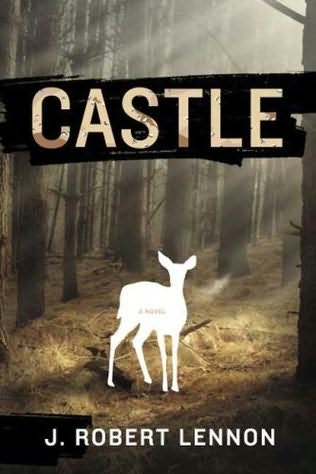
Castle by J Robert Lennon


I’m a huge fan of Lennon’s Mailman and Pieces For the Left Hand, so even though I have a long list of books to read, I immediately ordered this one and bumped it to the top of the list when I read about its release.

The story begins when Eric Loesch, a middle-aged loner, moves back to his mid-western hometown of Gerrysburg, where he buys an old fixer-upper on 620-acres of wooded land outside of the small town. Loesch is not a particularly likable man. He is rude to the people he encounters in the town, arrogant and stiff. And we get the sense that he has some rather dark secrets in his background. It’s a promising start to the story, especially with Lennon’s talent for creating quirky, flawed characters and intriguing stories about small-town life.

But about halfway through the book, the story takes a bad turn. Just as it’s getting genuinely creepy (mysterious sounds from the house at night, shadowy figures moving around in the forest), it goes off on two weird tangents, one that would stretch credibility for a Scooby-Doo plot, and a flashback at the end that feels out-of-place and tacked on. The latter, incorporated into the story with more deftness, might have worked and helped explain some of the character’s quirks. But the main plot arc is still so preposterous that I kept looking for signs that it was all an allegory, or a dream, or something other than just a bad story.

I’ll still read anything Lennon puts out, and I give him props for taking a big swing with this one. He just whiffed.