Friday, March 26, 2010

Thursday, March 25, 2010

750 Words

I'm trying a new website writing program, oh, just for the heck of it, I guess. It's called 750 Words and the idea is that each day you write 750 words. It can be about anything. I imagine I'll write little stories mostly. 750 words takes me about 15 minutes. It's the equivalent of 3 double-spaced pages, they say. The first entry was about the idea of writing 750 words a day. The second one was about a guy telling a bunch of Japanese businessmen a bullshit story. We'll see how this experiment goes.

Friday, February 26, 2010

Call tech support

I made these awhile back. I was going to do a whole series. I guess three is a series.


Saturday, February 20, 2010

Monday, February 8, 2010

How the Mighty Fall and Why Some Companies Never Give In by Jim Collins


I picked up Jim Collins’ Good to Great a couple years ago while on vacation. It was an easy-to-read, research-based, insightful look at how companies make the leap from, as the title suggests, good to great. This book examines the opposite phenomenon, category leaders that make a series of mistakes and plummet into irrelevance or non-existence. With the same diligent research, Collins and his team find five stages of decline and the warning signs that a company might be headed down that path:

1. Hubris born of success. The company enjoys success and develops an arrogant belief that they have it figured out or an attitude that they no longer need to innovate and can rest on their past successes.
2. Undisciplined pursuit of more. A company’s success in their core business leads them to a reckless pursuit of growth in other areas, often over-committing financially and/or simultaneously neglecting the core business that bore them success in the first place.
3. Denial of risk and peril. Although warning signs start to emerge that a company’s current path is untenable, they ignore the risk in hopes that they will overcome it or that, in another show of hubris, their previous success makes failure impossible.
4. Grasping for salvation. With their impending demise staring them in the face, the company makes drastic, often ill-advised changes in an attempt to pull out of their nosedive. They might hire a new superstar CEO, rebrand themselves, or implement a series of company-wide reorganizations. Collins makes the point that it actually is possible for a sinking company to recover from Stage 4 and even come back stronger than before, but it requires, at the very least, a disciplined return to their core competencies, not just a reshuffling of the deck chairs.
5. Capitulation to irrelevance or death. In a final death rattle, the once-great company resigns to being irrelevant, is swallowed by another company, or closes its doors for good.

These are the commonalities in the process of demise from company to company, but Collins points out that the specifics that lead a company down this dark path can vary. He quotes Tolstoy: “All happy families are alike; each unhappy family is unhappy in its own way.” Like in Good to Great, the most interesting part of this book is these specific case studies. Across industries, Collins examines companies that got it right, and then got it spectacularly wrong.

While Good to Great was probably a more helpful book with more concrete answers, as Collins points out, sometimes it’s more about the questions than the answers. And “What should I not do?” is a good question. There’s also something tragic (in the Shakespearean sense) to the company that rises to greatness only to collapse under the weight of its own arrogance. And that can be enjoyable to read about.

The audiobook is read by Collins, who can be over-the-top at times, but he obviously feels passionate about what he’s saying, so it’s tolerable.

In Defense of Food: An Eater's Manifesto by Michael Pollan [audiobook read by Scott Brick]


Most of what we eat is not food. That’s the simple premise in Pollan’s follow-up to The Omnivore’s Dilemma. Most of what we eat are food-like substances (and that might be generous), packed with preservatives, artificial flavors, fillers and other chemicals that don’t exist in nature. Pollan makes the point that if our grandparents walked into the modern supermarket, they wouldn’t recognize many of the things on the shelves. This is not good.

It’s the Western obsession with nutrients as opposed to food that has led us here. Sometimes flaky dietary science, a culture desperately seeking out the “magic bullet,” big-budget marketing campaigns from American food manufacturers and laws and regulation that place the financial health of the agricultural industry above the physical health of the population have all contributed to a situation where people really aren’t sure what they should and shouldn’t be eating. As Pollan points out, that’s a uniquely human dilemma.

Although he give the disclaimer that he’s nobody to be telling anybody what to eat, he does give some good, common sense rules of thumb: Eat mostly plants (mostly green plants). Eat less. Think of meat as more of a side dish. Don’t eat things with ingredients you can’t pronounce. Paradoxically, avoid foods that make health claims on their packaging (which implies, firstly, that they have packaging—something else to probably avoid). Shop around the edges of the grocery store. All of these direct us to eat food, not food-like, processed, manufactured food-like substances. It’s a great message, and with all the confusing health claims out there, it’s nice to have a call for simple common sense.

The audiobook is read by Scott Brick who does a fine job.

Sunday, February 7, 2010

Shutter Island by Dennis Lehane [audiobook performed by Tom Stechshulte]


Lehane is a fantastic writer of thrillers. All of his writing has an intense quality that keeps you on the edge of your seat with the pervasive sense that something terrible could happen at any time. This book, probably more than any of his other books, is laced with that paranoia. And although it starts off as a crime story, it’s really further down the spectrum toward psychological thriller, borderline gothic horror at some points. Somewhere close to Silence of the Lambs, perhaps.

The book opens in 1954, with two U.S. Marshalls taking a ferry out to Shutter Island, the location of Ashecliffe Hospital, a mental hospital for the criminally insane in Boston Harbor, to investigate the escape of a patient. The whole story is told from the point of view of Teddy, one of the Marshalls, as he delves deeper and deeper into the dark secrets of the island and the even darker mysteries of his own psyche. The twists and turns of the plot, at which Lehane is a master, are what make the story so interesting, so I won’t give any away here.

Lehane’s writing is as good as it always is, though the characters felt a little more stock than normal. While incredibly creepy, I didn’t connect with them as much as I did in his past stories. And perhaps because much of the book deals with the inner workings of the mind, I found pieces of it pushing the bounds of believability. Worth the read, although not Lehane’s best.

The audiobook is performed by Tom Stechschulte, who does a fantastic job at voicing multiple characters with distinct personalities. It’ll be interesting to see how the movie is (directed by Martin Scorsese and starring Leonardo DiCaprio).

Wednesday, February 3, 2010

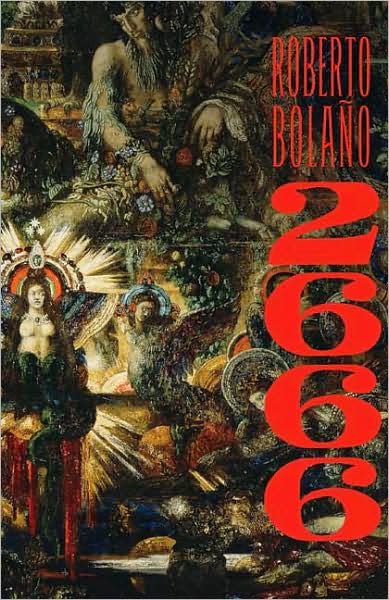
2666 Group

I'm reading Roberto Bolaño's 2666 with an online reading group. It's a very dense book, heavy in both senses of the word and I thought that a reading group would be helpful.

It's a fantastic book, although I'm only 100 or so pages into it. It's a collection of five loosely-related "books." I'm mid-way through the first.

Anyway, as I was doing some reading online about Bolaño, I came across this quote, from Rodrigo Fresán’s eulogy of Bolaño (translated from Spanish):

I don’t know how there can be writers who still believe in literary immortality. I understand that there might be those who believe in the immortality of the soul, and I can even believe there are those who believe in Paradise and Hell and in that freaky intermediate station that is Purgatory, but when I hear a writer speak of the immortality of definite works of literature I feel like slapping him. I’m not talking about really belting, so much as just one slap, and afterwards, probably, hugging and comforting him. In this I know that you won’t be in agreement with me, Rodrigo, because you are basically a non-violent person. As am I. When I say, deliver a slap, I’m more thinking of the palliative character of certain slappings, like those in the movies that are administered to hysterics so that they will react, stop screaming, and save their own lives.
It's such a nice quote, because it gets at what most writers aspire to--a type of literary immortality. Even those who imagine an granddaughter finding a dusty old box of journals in the back of the attic some day and pouring over them as if she has found, in the ramblings of her grandfather, an epic tale, humorous bits about a different time, the unpublished Great American Novel or, perhaps, just a bit of insight from someone who has seen more of life than she has.

Friday, January 15, 2010

Book List 2009

Here's a link to my final Book List 2009, as a pdf.

Thursday, January 7, 2010

Favorite Movies 2009

1. Tyson

2. The Hangover

3. Inglorious Basterds

4. Where The Wild Things Are

5. Avatar

6. Up In The Air

7. Watchmen

Desert Solitaire: A Season In The Wilderness by Edward Abbey


This was perhaps my favorite book from 2009. Written in 1968, during Abbey’s time as a park ranger in Arches National Monument near Moab, Utah, it falls somewhere between Jack Kerouac and Bill Bryson in both style and substance. Abbey is a cranky old coot, railing against civilization, the park service, the government, the tourists and the roads built to bring them into the depths of the parks. But I underlined the heck out of this book. It’s philosophy, environmentalism, natural history, taxonomy, folklore, poetry and angry ranting all in one. Abbey’s sense of humor and sarcasm are endearing, and his environmentalist spirit is inspiring, though dated by some of Abbey’s more hypocritical moments: he has long beautiful passages detailing the beauty of the canyonlands, yet offhandedly mentions rolling an old tire down the slope from the road for the fun of it; and with Luddite fervor, he lambasts the obnoxious presence of ignorant tourists in the park, yet longs to head to the mountains where he can carve his initials into the trunk of a juniper tree. Still, these faults aside, Abbey is a fascinating thinker, and his descriptions of the natural beauty around him are at times stunning. I’ve spent a little time in Joshua Tree and the canyonlands of southern Utah, and reading Abbey’s descriptions made me want to go back and explore them further. And the case he makes for our need to have a wilderness, an “out there” that serves both the few that explore it as well as the many who simply take comfort in knowing that it exists, that we haven’t developed every square inch of our crowded world, is both compelling and, I think, spot on.

Saturday, December 19, 2009

Manhood for Amateurs by Michael Chabon [audiobook]


This is a collection of riffs on different topics that circle around boyhood, fatherhood, and the bridge that ties the two. Chabon, who grew up with a good but distant father, now has four boys of his own and, as the title suggests, doesn’t always feel like he knows exactly what he’s doing. I’m not a father myself, but it’s easy to enjoy and relate to many of Chabon’s observations, and his honesty (both the honesty with which he writes and the honesty with which he deals with his kids) is admirable. Chabon’s refreshingly modern version of manhood calls into question the traditional ideas of masculinity (his mother pokes fun at him for carrying a man purse) as well as the traditional roles of the father (he’s not much of a handyman and prefers drawing superheroes with his kids to throwing the football with them). And he and his wife (who has written to much acclaim on the topic of motherhood) work as a team of equals as they tackle the dilemmas of parenthood (should they have their boys circumcised? how do they answer questions about drugs?). But the best part of the book is the exuberance with which Chabon embraces the concepts of childhood (imagination, superheroes) while at the same time lamenting the things that have changed since his own childhood (why did they have to go and add so many strange colors to Legos? what ever happened to kids being able to explore the neighborhood freely and alone?). This book would be a great gift for a young father, but it has enough insight and witty observation on the changing landscape of American suburbia to be relatable for anyone. Chabon’s writing, as always, is top notch, and he balances humor, serious criticism and poignancy very well.

If there were anything to criticize here, it would be that I found the author's reading voice slightly irritating at first. But the content is great.

Sunday, December 6, 2009

Independent People by Halldor Laxness


Laxness, an Icelandic author, won the Nobel Prize for literature in 1955 for his ability to create epic tales. This is certainly one of them. It’s the story of Bjartur, an Icelandic sheep farmer who is set like a mountain in his ways. He stubbornly bears the loss of family members, attacks on his sheep, political corruption and the changing world around him, set on his goal to live independently and build his home and farm, Summerhouse.
“Yes, it was a good man indeed who could stand immovable as a rock in these times, when everything around him, including money and views of life, was afloat and swirling in perpetual change; when the strongest boundary walls between men and things in time and place were being washed away; when the impossible was becoming possible and even the wishes of those who had never dared to make a wish were being fulfilled.”

The most interesting conflict though, better than Bjartur’s conflict with the world, is his stubborn feud with his equally strong-willed daughter, Asta Solilja. The pig-headed way in which Bjartur disowns his daughter and refuses to make amends makes you hate him, but in the end, as he is weighted down by debt and loneliness and finally begins to admit regrets, it’s hard not to feel for Bjartur. For his entire life, he has been principled to a fault, but principled nonetheless. It is then, as he looks over Summerhouse, ruined by poor financing and poor construction, that he writes:
“For what are riches and houses and power
If in that house blooms no lovely flower?”

Independent People is a book that at times feels like it is being endured, much as Bjartur endurs the harsh northern winters. While there are moments of action, sharp conflict and shocking surprise, much of the novel is concerned with the various diseases that infect the sheep, descriptions of the weather and landscape, the politics of socialism and the poems that Bjartur enjoys writing and reciting. It’s rewarding in the end, but is a slog to get through. It has been compared to Tolstoy. The story at times also reminded me of Gabriel García Márquez’s One Hundred Years of Solitude, though I would be quicker to recommend that book. As frustrating as it is at times, by recommending Independent People to someone, I’d worry that they might return and throw the book at me.

Friday, December 4, 2009

So my 3rd cousin takes some rad photos...


A few months ago, I got an email from a guy named Dan Dion. I'd never met him before and had no idea who he was, but apparently, we were related. Another cousin of mine had been doing some great genealogy work and had contacted him, giving him my email address since we both live in the Bay Area. Dan is my 3rd cousin.

Turns out, Dan is also a fantastic photographer. He's been the house photographer at the Fillmore for 15 years, along with the Warfield, Shoreline Amphitheater and Cobb's Comedy Club, among other venues.

Last night, I attended the opening of a photo exhibition: Dan Dion's Rock, Jazz, and Furthur: Photos from The Fillmore Auditorium 1994-2009. I got to meet Dan and take in his collection of historic photographs of amazing musicians, both backstage portraits and performance photos. Really cool stuff. It includes photos of some of my personal favorite musicians (Petty, Tweedy, Nick Cave) and quite a few legends (Cash, BB King, John Lee Hooker, Radiohead). I think my favorite shot was one just to the left of the entrance, of a David Byrne show. Dan captured the whole stage, the band, what looks like a dancer in an S&M outfit to the side, and about 15 rows of the crowd including, in the lower left, the mostly-exposed butt of a crowd surfer wiping out. Looks like a great show.

If you have a chance, you should swing by the gallery. The show runs through the end of January.

Wednesday, December 2, 2009

Tennessee Biodiesel


Gifts are important because they tell people what you think of them.

I got this hat from my client. Apparently, they get lots of schwag and thought of me when they got this one. I think I like that.

Oakland, How I Love Thee


I saw this on the bus. Fantastic. I think Oakland should use it as their official logo. Put it on shirts and stuff.

Actually, maybe I'll just use this photo as a standard reply to emails I don't want to receive.

Tuesday, December 1, 2009

Monday, November 30, 2009

Oakland

This video captures the vibe of what makes Oakland so cool. Sent to me via Kelly.

Tuesday, November 24, 2009

Holiday Party

I'm on the holiday party committee at work. Not a Christmas party, a holiday party. We have to come up with themes. One of the themes I was pushing for was "Fiasco," but that seemed too vague. So I suggested a disability-themed holiday party. At the door, everyone would draw a piece of paper from a hat. Their paper would have a disability they have to pretend they have for the party. Some examples:

Rickets
Partial Paralysis of the left leg
Cleft palette
Limited use of right arm
No opposable thumbs
Midgetism
Dwarfism (must research how this is different from midgetism)
Two left feet
Blonde
Beat by father and/or uncle
Raised by wolves
Deaf in right ear
Tourette’s in Spanish (you yell bad words, but only in Spanish)
Castrated
I.Q. of a Doberman (they are smart dogs)
No Liver
Social Narcolepsy
Retrograde Amnesia
Shortness of Breath
Racist
Bionic Fist
Not circumcised
Mad as Hell
Cervical cancer

Everyone else would have to guess what their disability is.

This was not the theme selected for our holiday party.